
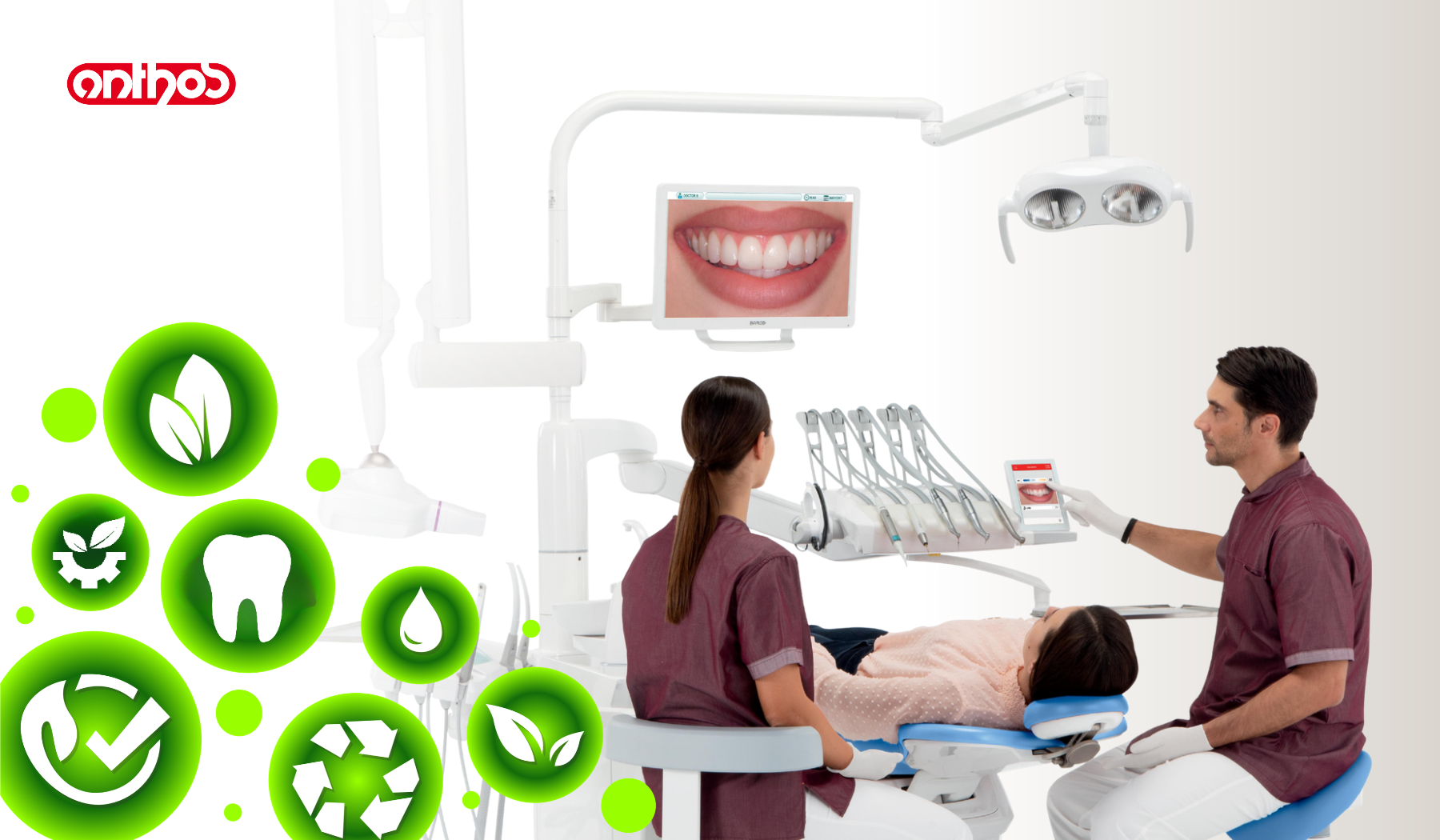
Sustainability is no longer just a buzzword, but a true management pillar for cutting-edge clinics.
While the "green" approach was once limited to reducing single-use plastics or digitizing records, today the real revolution lies in optimizing two fundamental resources: water and electricity.
Choosing smart technologies does not mean compromising on clinical performance. On the contrary, efficiency works silently in the background, improving performance, simplifying protocols, and cutting fixed costs.
Smart stand-by and reduced energy consumption
The easiest way to waste energy is letting machines draw power when no one is using them. Anthos dental units offer a direct response to this problem through automatic detection.
The chair can be equipped with an optional sensor that detects the patient's presence. Linked to the stand-by function, this device drastically reduces energy consumption when the chair is not actually occupied. Automation also extends to lighting: at the dentist's discretion, the sensor can control the switching on and off of the LED operating light based on the patient's presence or absence, preventing the light from staying on needlessly between appointments.
Water management and waste-free hygiene
Water is a critical resource in dentistry, both for clinical procedures and for maintaining circuits. Replacing lengthy and imprecise manual cleaning practices with automatic systems ensures higher safety standards and a calibrated use of liquids.
Integrated systems like BIOSTER automate the intensive disinfection of internal circuits, while the FLUSHING function manages rapid rinsing cycles of the ducts, eliminating stagnant liquids with maximum water efficiency. Furthermore, the S.H.S. device offers an alternative supply to mains water via a distilled water tank. This system prevents limescale build-up, extending the lifespan of the instruments and reducing the environmental impact associated with extraordinary maintenance and the premature replacement of components.
Space efficiency and eliminating the unnecessary
Sustainability also involves streamlining space and equipment. Natively incorporating instruments means having fewer machines connected to the power grid.
The integration of complete modules for endodontics and implantology (including brushless micromotors and peristaltic pumps controlled directly from the dental unit's console) completely avoids the clutter and overlapping energy consumption of old stand-alone systems placed on external carts.
The power of data with Di.V.A.
Thanks to the digital virtual assistant Di.V.A., it is possible to access a cloud-based dashboard to monitor the actual use of a single dental unit or the entire fleet of machines. The system tracks the usage frequency of instruments and hygiene systems, recording an accurate history of the disinfection cycles performed. This real-time diagnostic is fundamental not only to verify the correct turnaround of the equipment but, above all, to accurately estimate the practice's consumption, allowing the professional to apply targeted optimization strategies.
The future lies in integrated efficiency
Embracing sustainability in the dental practice means investing in a technological ecosystem capable of self-regulating and providing precise data on its consumption habits.
Reducing water and electrical waste through automation protects the environment, enhances the team's work, and significantly lowers operating costs.
This approach to responsible innovation reflects the values and vision of Cefla, the group to which Anthos belongs. For a broader perspective on the environmental challenges of the sector and the group's commitment, we invite you to read the corporate in-depth article: Sustainability in dentistry: an overview and Cefla’s role.